
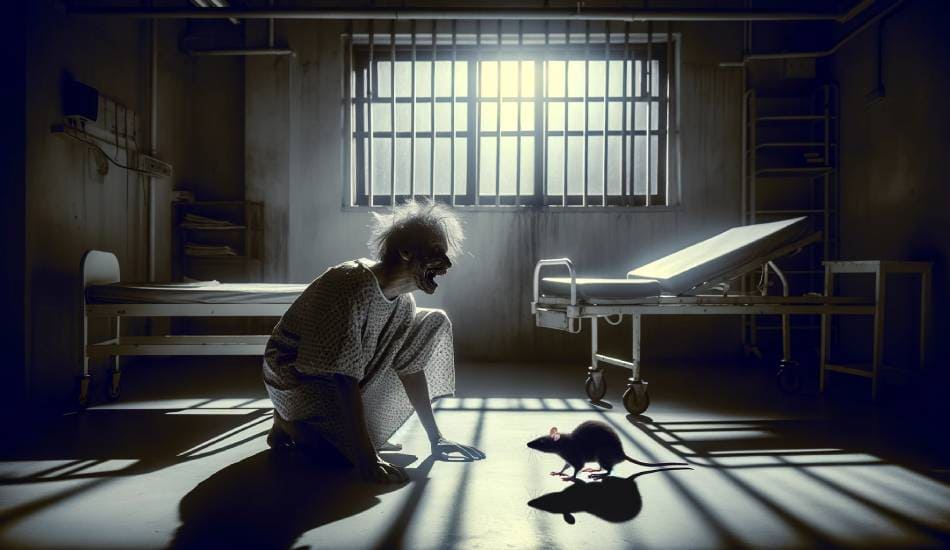
As I sit and attempt to design another escape room, I think about how there are plenty of escape rooms out there that use live actors, but not many use actors as actual puzzles. I know firsthand that having a live actor as a puzzle can be a room’s highlight and add to the immersive narrative. This concept can help transport players into a story where they’re not just participants but characters within the tale.
Imagine an actor playing a patient in an asylum. You need to get something from them like a key or note. They are running around their room acting like a mouse. Your group needs to figure out how to get that item. You try to ask for it, you try to beg for it, you try to scream at him and demand it. Nothing works. What do you do?
If I were designing this room I might provide two solutions to this puzzle that players can use. The first is to have some cheese in a breakroom or lunchbox that players can trade for the key or note. The second way is to have a stuffed cat in the main room that players can use to threaten the actor into giving them the key or note.
Advantages of Actor Involvement
1. Enhanced Immersion: Having a live actor contributes to a more realistic and engaging environment. It’s one thing to solve a puzzle on a piece of paper; it’s another to interact with a character from the story. This level of engagement can make the experience more memorable and exciting.
2. Dynamic Interaction: Unlike static puzzles, actors can react and adapt to the players’ actions, making for a more dynamic and unpredictable game. This can lead to unique experiences for every group that goes through the room.
3. Emotional Engagement: Actors can evoke emotions — fear, amusement, urgency — that simple puzzles can’t. This can also be done through set design, music, and specialized props, but puzzles themselves don’t usually evoke emotions.
4. Storytelling: Actors help to advance the narrative, offering clues and context that can be more engaging than reading notes or listening to recordings. This storytelling aspect can make the puzzle-solving more intuitive and satisfying.
Challenges and Considerations
While the benefits are significant, we all know there are challenges to incorporating live actors into escape rooms. The biggest challenge is that it requires extra staff, and staff that can improvise and act. Not always easy to find that, unless you’re willing to pay more than a typical wage. It also requires careful planning and a well-crafted narrative that allows for their inclusion. Furthermore, some players might be uncomfortable with the close interaction required, so providing alternative options or clear guidelines can enhance the experience for everyone.
The use of actors in escape rooms, as illustrated by the “rat” patient in the asylum, offers a more dynamic and immersive puzzle-solving experience. It bridges the gap between player and story, making players active characters in the unfolding narrative. This level of interaction and immersion can transform a simple game of clues and keys into a memorable adventure, making it clear why more escape rooms are turning to this engaging format. Whether players are outwitting a blind servant or negotiating with an asylum patient, live actors can turn an ordinary escape room into an extraordinary tale of suspense and strategy.
